

Carolina Soto Pik and Ieuan Edwards debut new works at Projects Kavel Rafferty in Margate
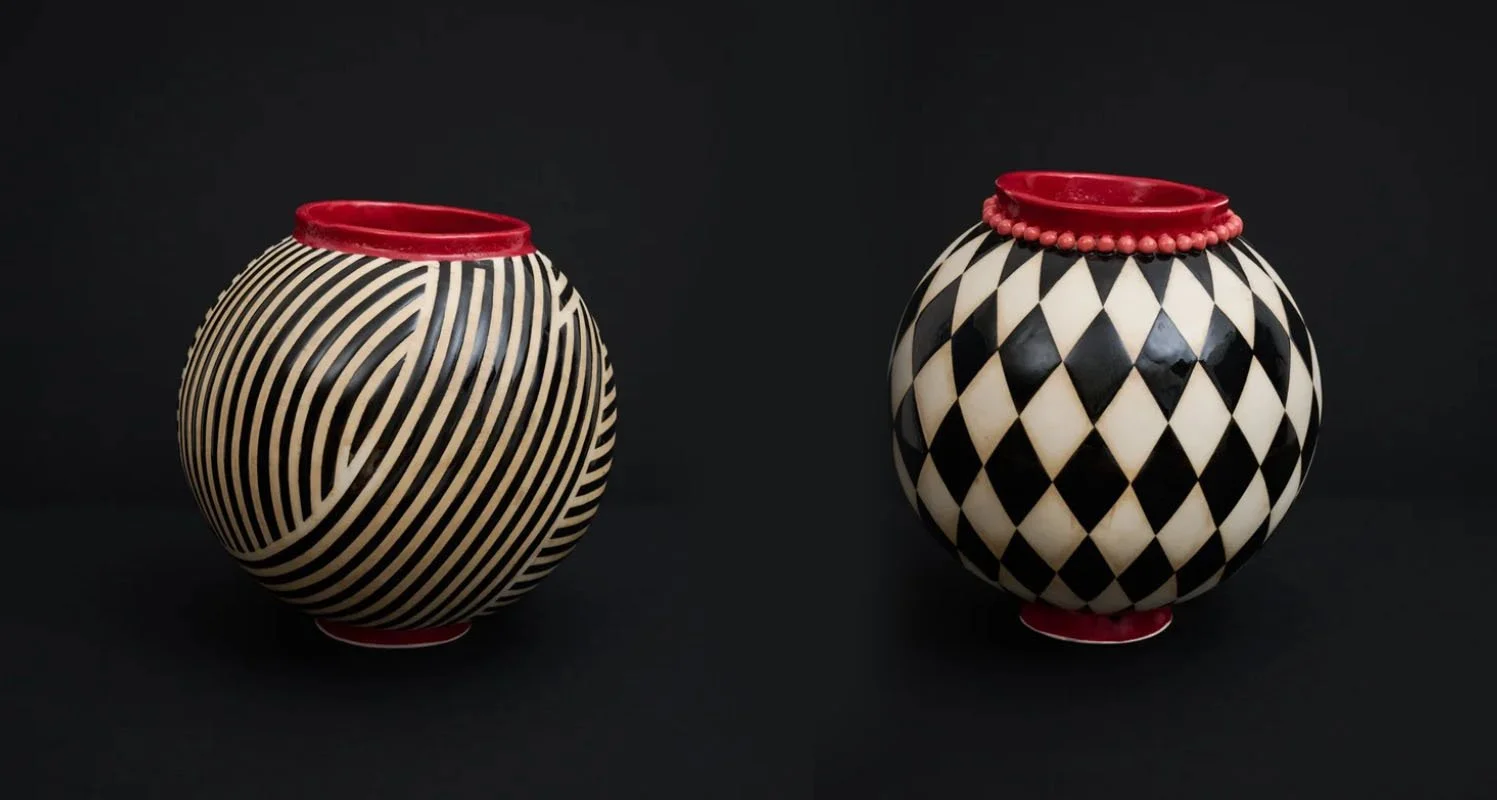
Held in Place explores architecture, geometry and the structures that shape place through ceramics and reduction linocut printmaking.
Carolina Soto Pik and Ieuan Edwards present Held in Place, a duo exhibition at Projects Kavel Rafferty, Margate, running from 15–21 July 2026, with an opening reception on 17 July from 6–9pm.
Bringing together Soto Pik's geometric ceramics and Edwards' reduction linocuts, Held in Place explores how architectural, industrial and coastal structures contain, support and protect both physical space and emotional experience. Drawing on Brutalist architecture, Modernist design and coastal engineering, the exhibition considers how built forms shape our understanding of place, memory and resilience. While Margate's distinctive landscape provides an important point of reference, the works also extend beyond the town to investigate broader ideas of geometry, perception and the relationship between form and function.
Continuing the dialogue established in their previous exhibition, Held, the artists examine structures designed to endure—from sea defences and towers to vessels, frameworks and geometric forms. Through a shared visual language of repetition, pattern and construction, they explore the tension between permanence and change, stability and movement.
Soto Pik's ceramic works move between architectural references and abstract geometric forms. Alongside interpretations of Margate landmarks, including the Lido Stream Tower and Arlington House, she creates vessels, cones and spheres informed by the visual languages of Brutalism, Bauhaus design and Op art. Working with black stoneware clay and masked glazing techniques, she produces high-contrast surfaces that wrap rhythmically around three-dimensional forms, exploring the tension between rigid geometry and fluid perception. Her work considers how geometry can both organise space and create visual instability, transforming functional objects into sculptural studies of balance, containment and structure.
"That white sculpture came from thinking about interior and exterior at the same time — a form wrapped around itself, one shell holding another," says Soto Pik. "It's the clearest way I've found to talk about holding, protection and containment without making anything literal."
Edwards' reduction linocuts draw on architectural and industrial forms, including Margate's Lido Stream Tower, Arlington House and the textures of the surrounding coastline. His reduction printing process, in which each layer permanently removes material from the block, echoes themes of construction, erosion and transformation. His prints examine how built environments bear the marks of labour, weather and time, presenting architecture as a record of both human activity and continual change.
"I keep coming back to buildings that are still standing but clearly showing their age — the staining, the patched-up bits, the way the elements have had their say," says Edwards. "Reduction printing lets me build that up and cut it away in the same move."
Together, the artists present architecture not simply as a backdrop, but as an active system of support and adaptation. Whether through recognisable landmarks or abstract geometric forms, Held in Place considers the ways structures hold, protect and frame both landscapes and lived experience.
Carolina Soto Pik is a Chilean-Argentinian ceramicist based in Margate. She began working with clay during lockdown, developing a slab-building practice that bridges geometry with architecture, and interior space. Symmetry, contrast, and surface are explored through her functional and sculptural objects, with black stoneware clay and high-contrast glazes influenced by Op art and Modernist design. Instagram: @pikceramics
Ieuan Edwards is a Margate-born printmaker who focuses on place, industrial landscapes, and coastal environments. With family roots in South Wales' mining communities, his work examines how structures persist as residues of labour, leisure, and change. His reduction linocuts layer colour and form whilst simultaneously cutting away material, echoing the incremental erosion and adaptation of the built environments he studies. Instagram: @blackgoldpress
