

Christopher Dresser: The Pursuit of Beauty - major exhibition at The Hub, Sleaford
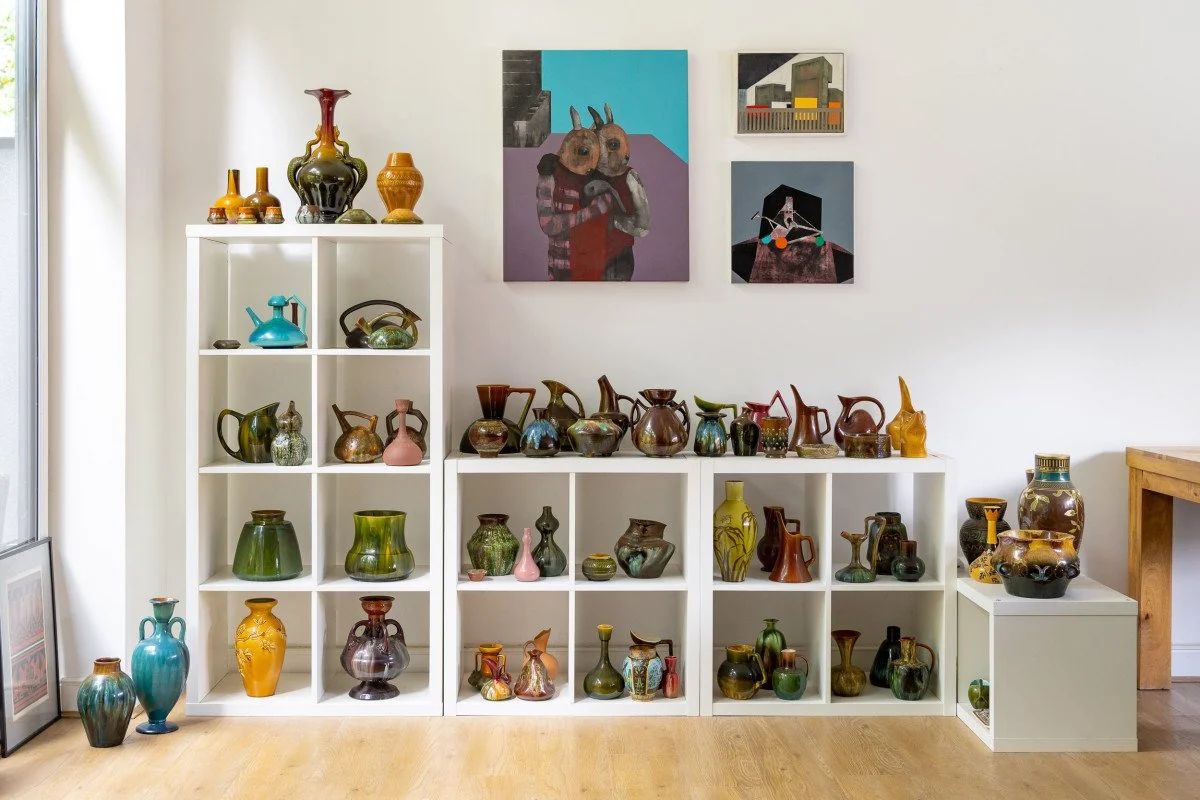
Christopher Dresser. Private Collection. Photo Jules Lister
This November, the Hub, a national centre for craft and design, presents Christopher Dresser: The Pursuit of Beauty, a major exhibition celebrating his work and legacy. Focusing on designs for the home, the exhibition brings together some 180 objects from private collections across the UK, many of which have never been publicly displayed. Ceramics, glass, metalwork, furniture and printed material reveal the remarkable breadth of Dresser’s output.
Christopher Dresser (1834-1904) is widely regarded as Britain’s first industrial designer. A leading figure in the Aesthetic Movement, he embraced modern manufacturing processes to create affordable, functional, beautiful objects for the Victorian middle class, offering designs and ideas that remain radical and relevant today.
Dresser believed that good design could enhance everyday life and championed the use of traditional materials and modern manufacturing techniques, such as electroplating, to make well designed objects accessible to a wider audience. His embrace of new technologies contrasted with that of his contemporary, William Morris, a leading figure in the Arts and Crafts Movement, which emphasised traditional handmade craftsmanship.
A lifelong admirer of Japanese design, Dresser visited Japan in 1876, becoming the first British designer to do so on behalf of the South Kensington Museum (now the V&A) after the country reopened to foreign trade. His influential book Japan: Its Architecture, Art, and Art Manufactures (1882) helped fuel the Victorian fascination with Japonisme.
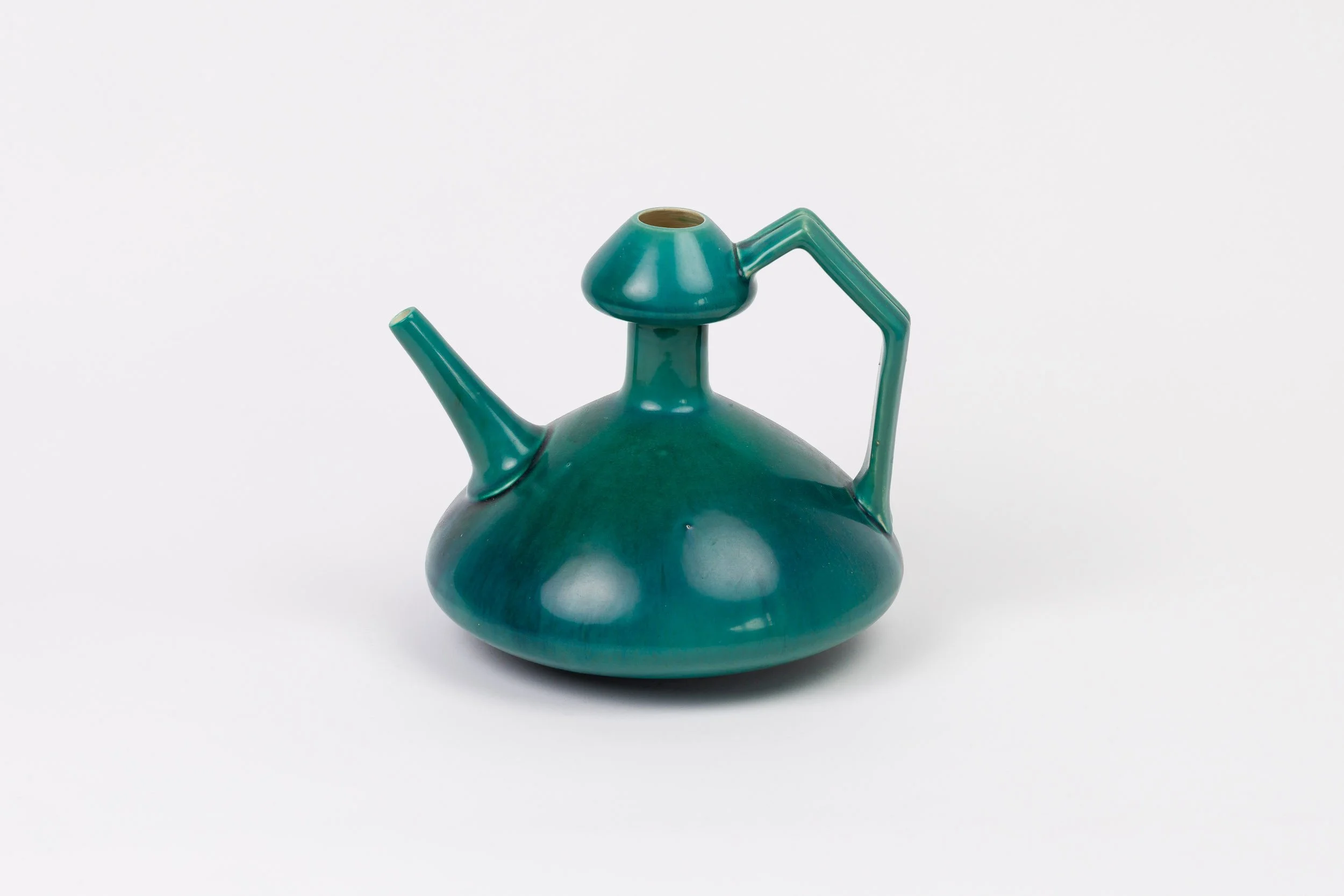
Christopher Dresser. Ceramic Ewer c1880 Linthorpe Pottery. Private Collection. Photo credit Jules Lister
The exhibition showcases work produced by many of the manufacturers Dresser collaborated with, including ceramics from Linthorpe Art Pottery, intricate cast iron objects made by Coalbrookdale Company, and fluid, abstract designs in Clutha glass from James Couper & Sons. It also features silver-plated tea sets and toast racks from James Dixon & Sons, whose striking forms appear to anticipate later Modernist and Bauhaus designs.
Many of Dresser’s designs retain a remarkably contemporary appearance, and the exhibition includes a set of reproductions of a three-legged conical sugar bowl originally made in silver plate and reissued in brightly coloured resin by Italian design company Alessi in 1993.
The exhibition also showcases the work of four contemporary artists – Gabriele Beveridge, Alice Channer, Coco Crampton, and Magdalene Odundo - whose work echoes Dresser’s innovative use of materials and design processes, responding to his radical approach from a twenty-first century perspective.
By bringing together historic works and contemporary objects, the exhibition highlights the enduring influence of Christopher Dresser’s vision and innovation. More than a century after his death, Dresser’s pioneering approach to design continues to inspire artists, makers and designers, reaffirming his position as one of the most significant and forward-thinking figures in the history of British design.
The exhibition is curated by Joshua Lockwood, Exhibitions Manager at the Hub, in collaboration with collector Ian Robinson, who has loaned works to the exhibition.
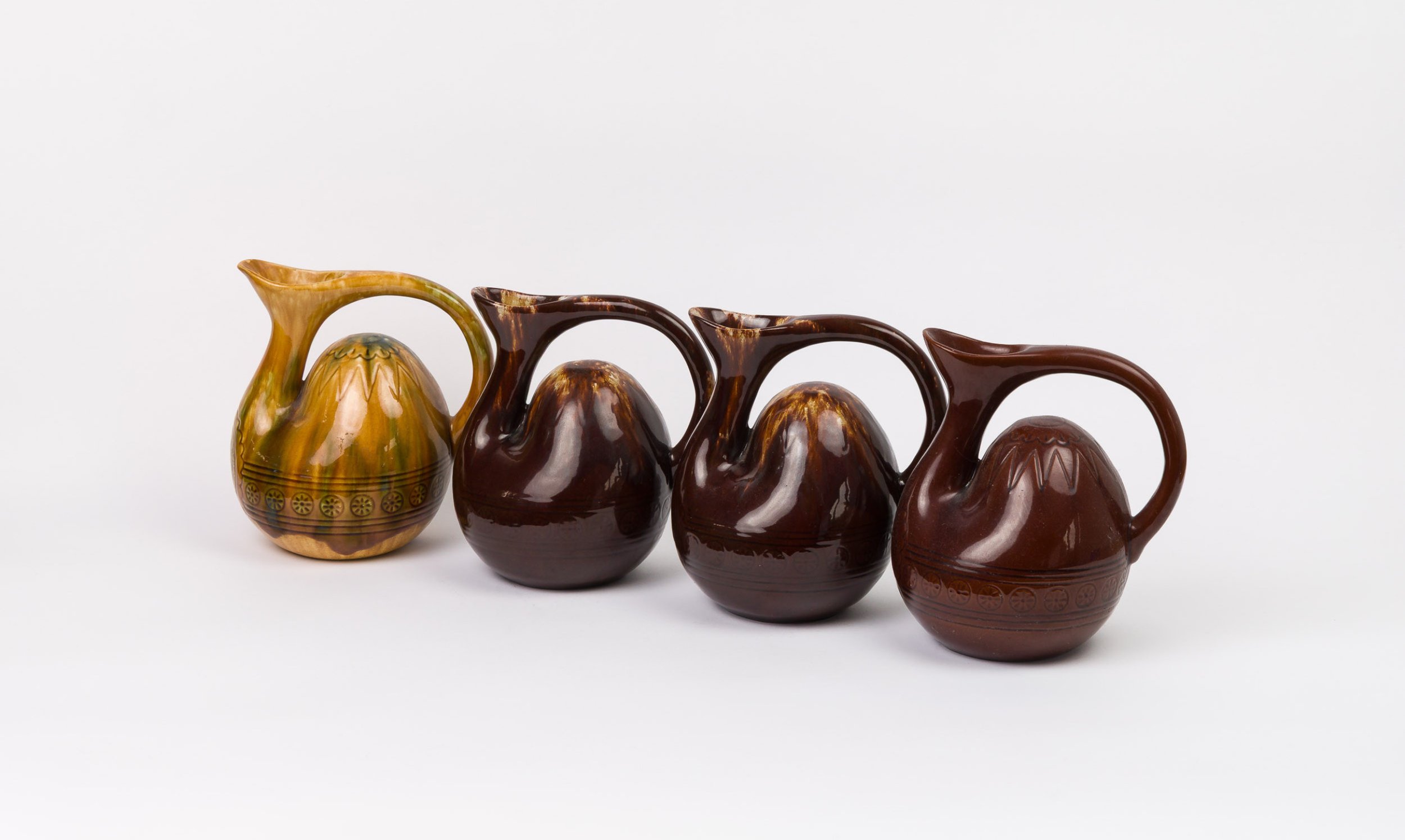
Christopher Dresser. Ceramic Pitchers L c 1890 possible Ault, ,R c 1880 Linthorpe Pottery. Private Collection. Photo Jules Lister
Joshua Lockwood, Exhibitions Manager at the Hub, said:
"One of the most exciting aspects of this exhibition has been the opportunity to introduce Christopher Dresser’s work to new audiences and to explore why his ideas still feel so relevant today. By placing his work alongside contemporary artists, we’re able to look at his processes and innovations from fresh perspectives and highlight the lasting influence of his approach to design.
It has also been a pleasure to work with Ian, whose deep knowledge and passion for Dresser have brought real insight to the project. Thanks to the generosity of private collectors, we’ve been able to bring together many remarkable objects that are rarely seen, and in some cases have never been displayed publicly before, offering visitors a unique opportunity to experience the breadth and originality of Dresser’s work."
About Christopher Dresser
Born in Glasgow, Scotland on 4 July 1834, Christopher Dresser was recognised as a prodigious artistic talent. At the age of 13, he enrolled at the Government School of Design, London, where he studied botany and design. There he was encouraged to observe the natural world and explore how natural forms could be adapted to create manufactured goods. A prolific author, lecturer and design theorist, Dresser championed design education and closer collaboration between artists and industry.
Throughout his design career Dresser worked independently, allowing him to work with a multitude of manufacturers and retailers in the UK, US and France, including Liberty in London and Tiffany & Co in New York. He was interested in all aspects of design for the home, including furniture, tableware, wallpaper and textiles, and created elaborate interiors for several wealthy clients.
Dresser worked as a designer until his death aged 70 in 1904. Widely admired during his lifetime, Dresser’s reputation fell into obscurity after his death. It was revived in 1936 thanks to the architectural historian Nikolaus Pevsner, who praised his ‘astonishing’ designs. In 2004, the V&A and the Cooper-Hewitt National Design Museum staged the first comprehensive retrospective of Dresser’s work. Today, his work is represented in museums around the world.
Exhibition details
Title: Christopher Dresser: The Pursuit of Beauty
Dates: 28 November 2026 – 7 March 2027
Venue: Hub, Navigation Wharf, Carre Street, Sleaford NG32 7TW
Website: hub-sleaford.org.uk
Admission: Free
