

Victor Pedrosa, co-founder of Rescued Clay
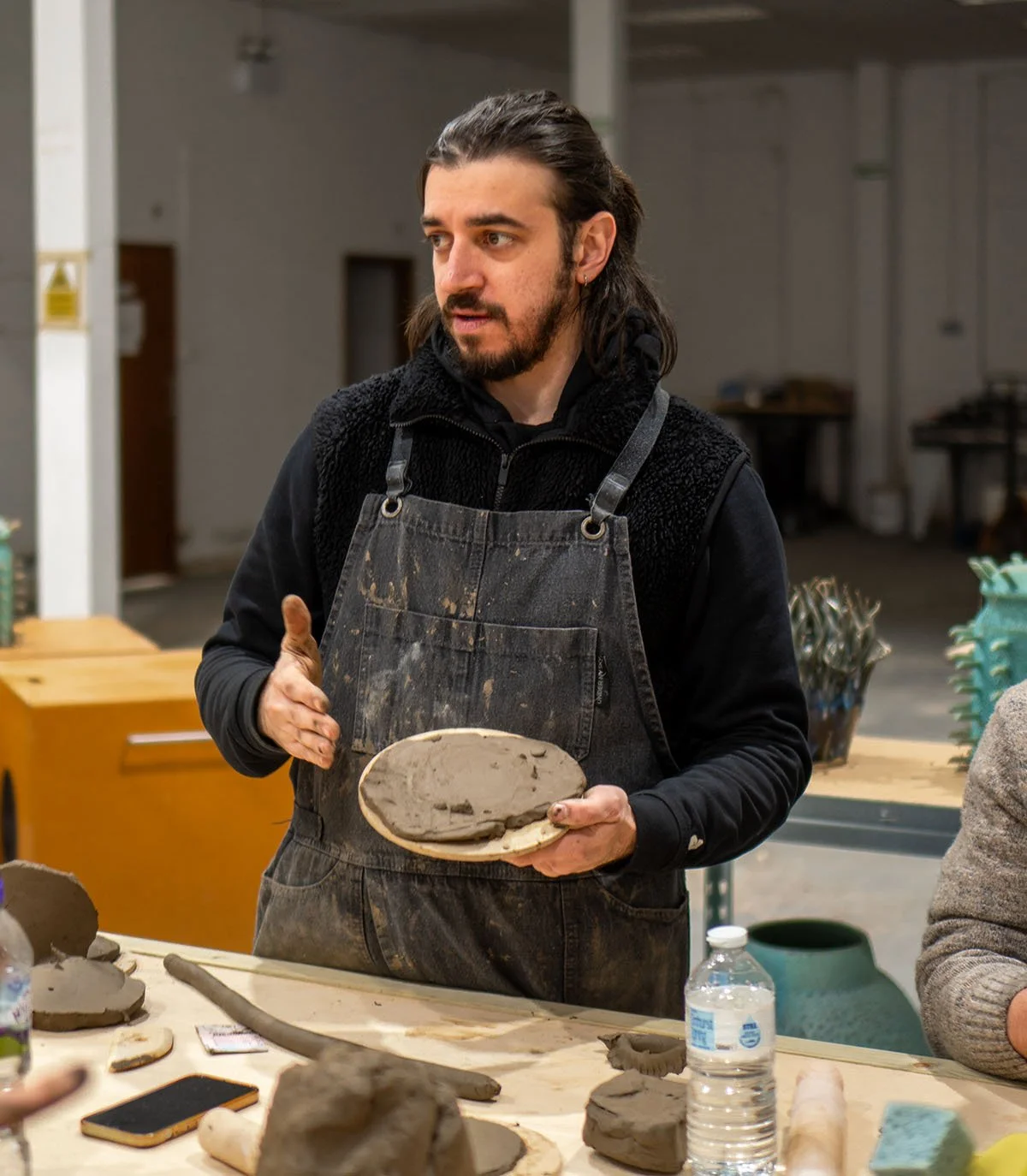
Victor Pedrosa
I am very pleased to introduce Victor Pedrosa who has co-founded an amazing idea: Rescued Clay - salvaging spoil clay from construction sites and transforming it into new narratives. To date, Rescued Clay has diverted over 15 tonnes of this material from landfill, driven by the mission to transform waste clay into objects, foster community connections, and raise awareness about sustainability.
When I asked him to participate in this interview, I had no idea he was a computational neuroscientist! Wow! I love meeting people who are both scientific and artistic because I am very much the latter and not at all the former (despite my parents both being more sciencey people!) Anyway, read on to find out how Victor lives in these two different worlds
Who are you?
I'm Victor Pedrosa, a computational neuroscientist by training and a potter by passion. I'm currently a Lecturer at UCL, where I teach computing and study how the brain learns and perceives the world. But I'm also the co-founder of Rescued Clay, a social enterprise that transforms construction excavation clay into accessible pottery resources. I live between these two worlds – the precise, data-driven realm of neuroscience and the tactile, intuitive world of clay – and I find they inform each other in unexpected ways and bring balance to my life.
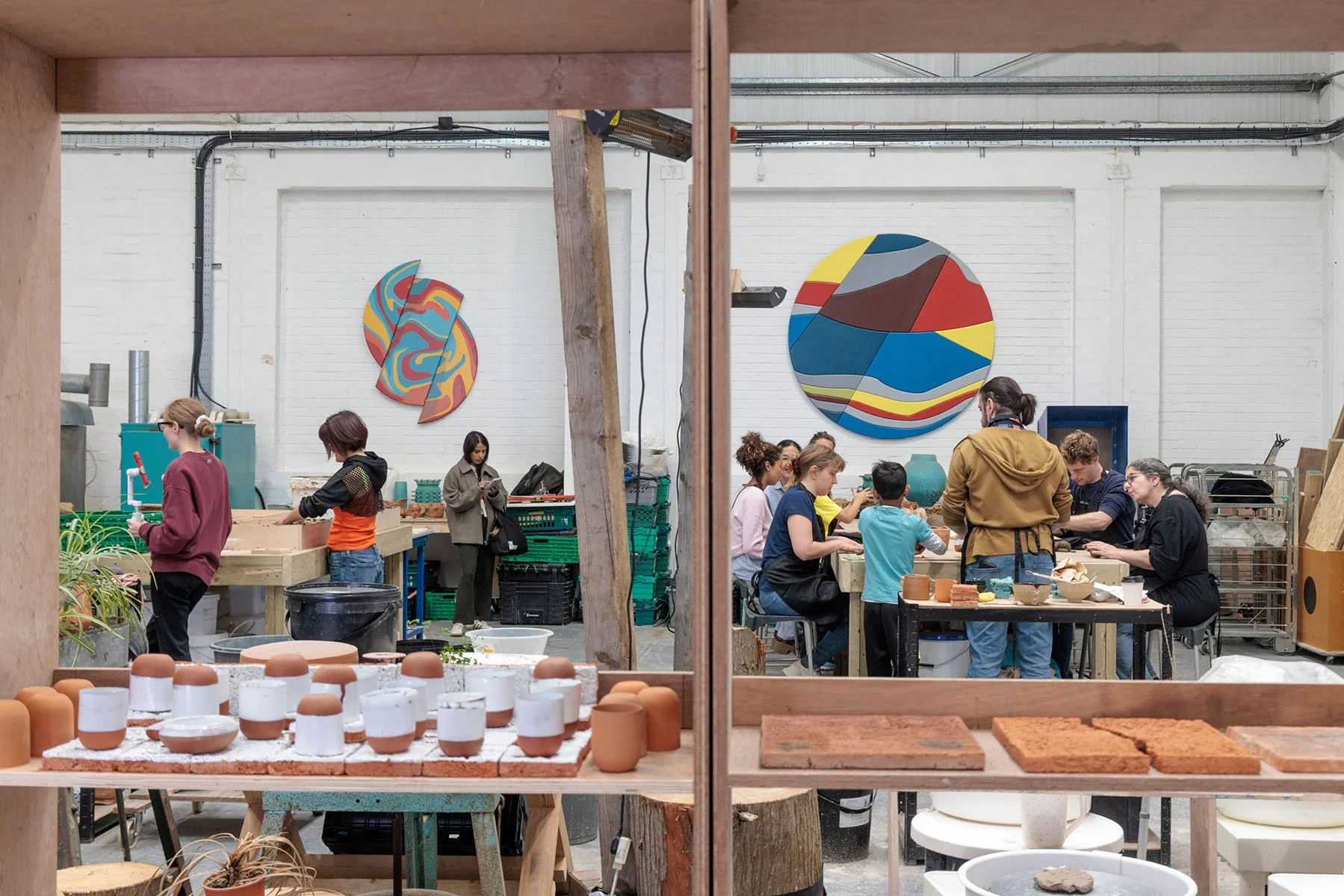
Rescued Clay
Why do you also have a thing with ceramics?
Clay found me during one of the most difficult periods of my life. In 2013, an art therapist in Brazil introduced me to clay as a form of therapy. What started as a way to cope became a deep passion. I spent 3.5 years at a local workshop, and clay became my anchor. When I moved to the UK, I struggled to find the same quality materials and access to studios, but slowly found my way around and discovered a very supportive community.
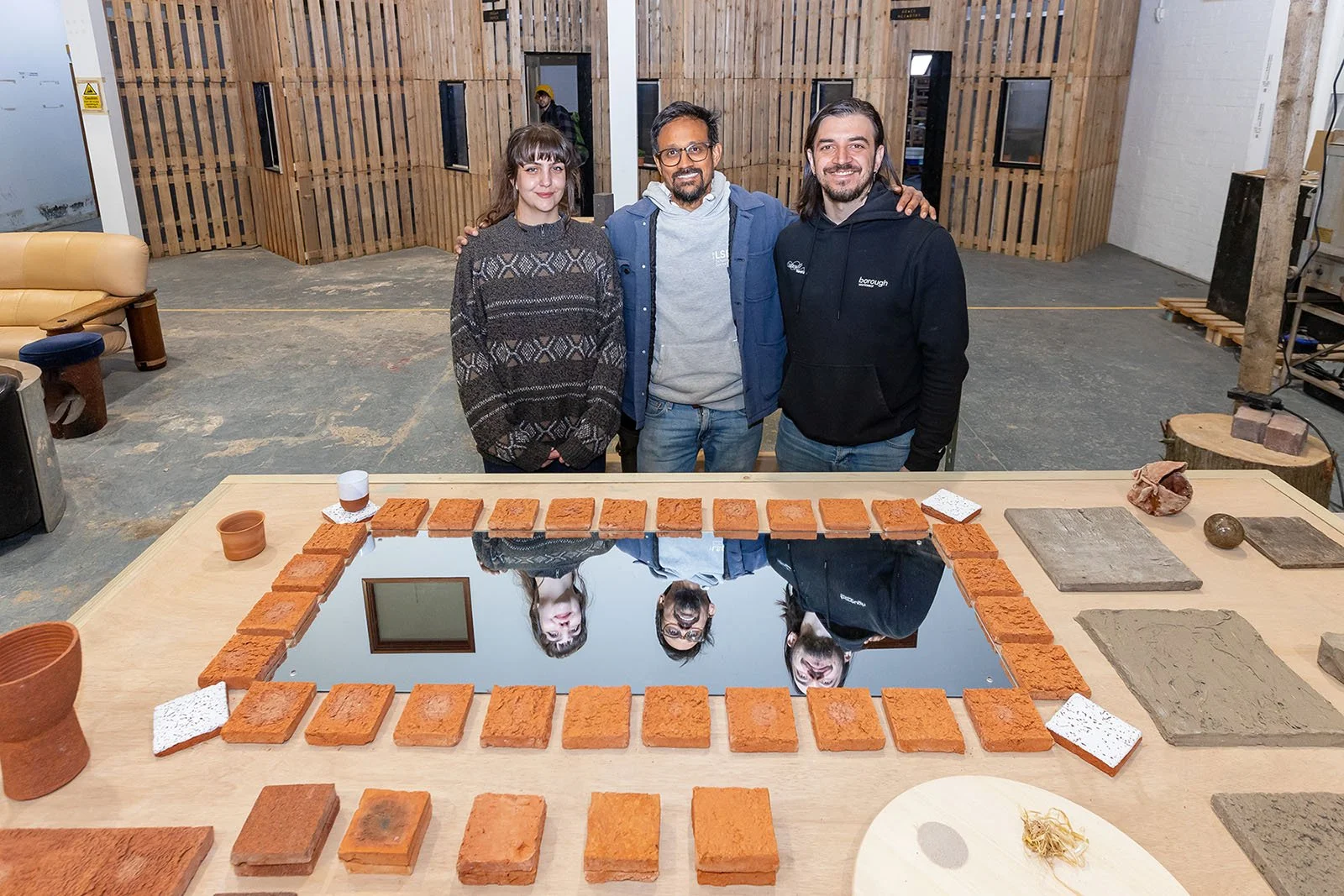
Victor with co-founder Prashant and a volunteer - with experimental pieces made mixing excavation clay with waste materials from the local neighbourhood, exploring new sustainable material possibilities.
When did ceramics come into your life?
Ceramics entered my life in 2013, though I didn't immediately recognise it as the beginning of something so central to who I am. It took time to understand that this wasn't just a hobby – it was a way of thinking, creating, and connecting with materials and people. In early 2020, I started to build my own practice at home and take it more seriously. Two years later, I moved into a studio, and shortly after that, the idea of working with waste material started to grow. In 2023, Rescued Clay began to take shape, and we officially launched in late 2024. We've had our own space for just over a year now, and we're growing rapidly in terms of both our clay distribution and community reach.
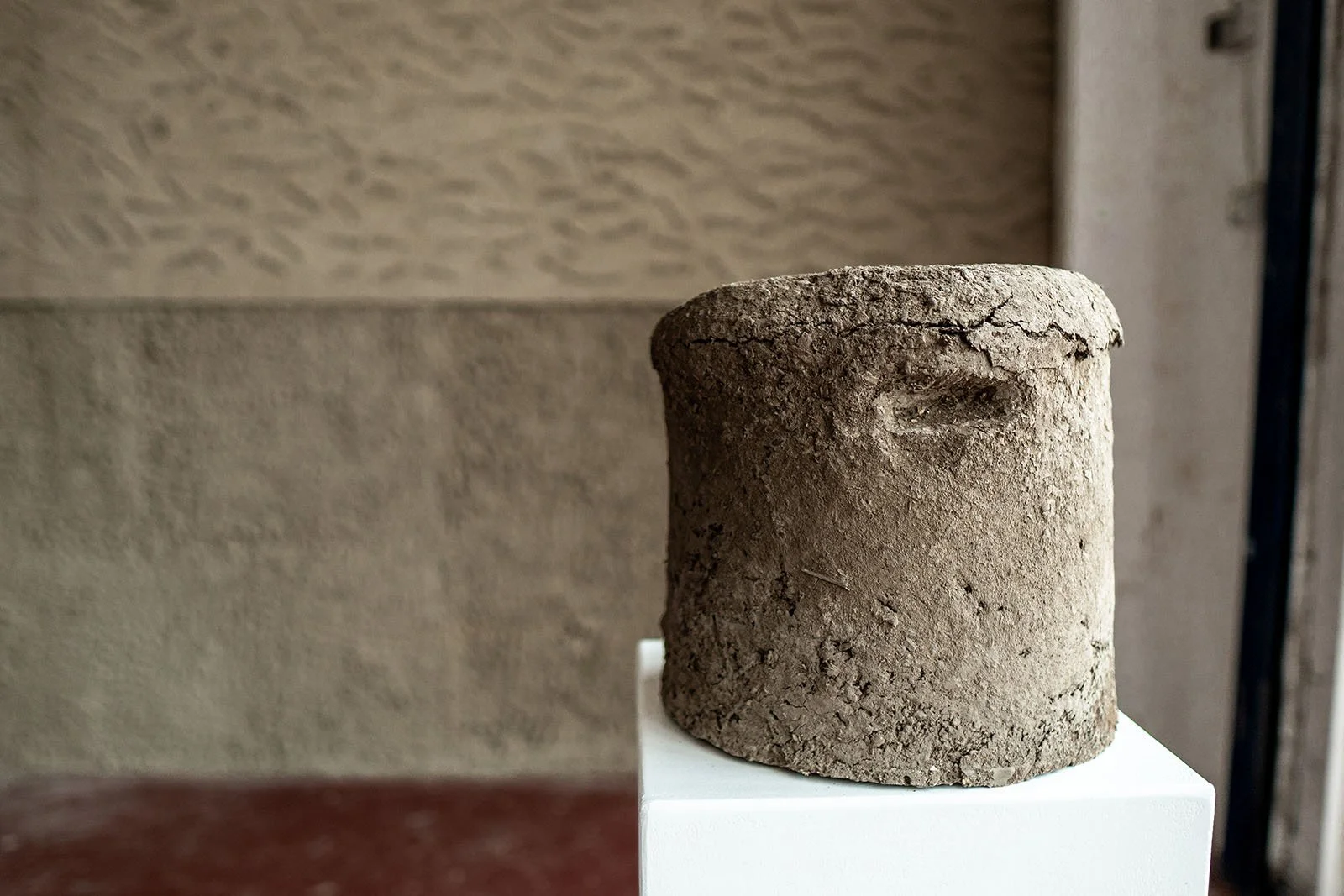
Actual rescued clay!
Where can we find you on a typical day?
On any given day, you might find me at UCL teaching coding to physics students, analysing data about how neurons encode visual information, or reviewing computational neuroscience papers. But you're just as likely to find me elbow-deep in clay, preparing materials or making pieces for Rescued Clay. I test different ratios of excavation clay mixed with various waste materials, always exploring more sustainable ways of working from our industrial estate. I'm also launching online workshops through a new venture called The Pottery Academy, where I'm trying to make pottery accessible to as many people as I can reach.
What are your plans for the future?
I'm at an exciting crossroads. I'm exploring career transitions that would allow me to focus more on teaching and making both science and pottery accessible to broader audiences. With Rescued Clay, we're applying for more funding for public projects, trying to partner with more developers, and searching for our next home. The future is a bit uncertain at the moment because the building we're in will be demolished very soon, but the project of rescuing clay from construction sites will continue, home or not. I'm really keen to keep studying materials and finding new ways to make both ceramic practice and our local neighbourhood more sustainable. At the same time, I'm hoping to bring pottery to more homes and people by removing physical and geographical barriers.
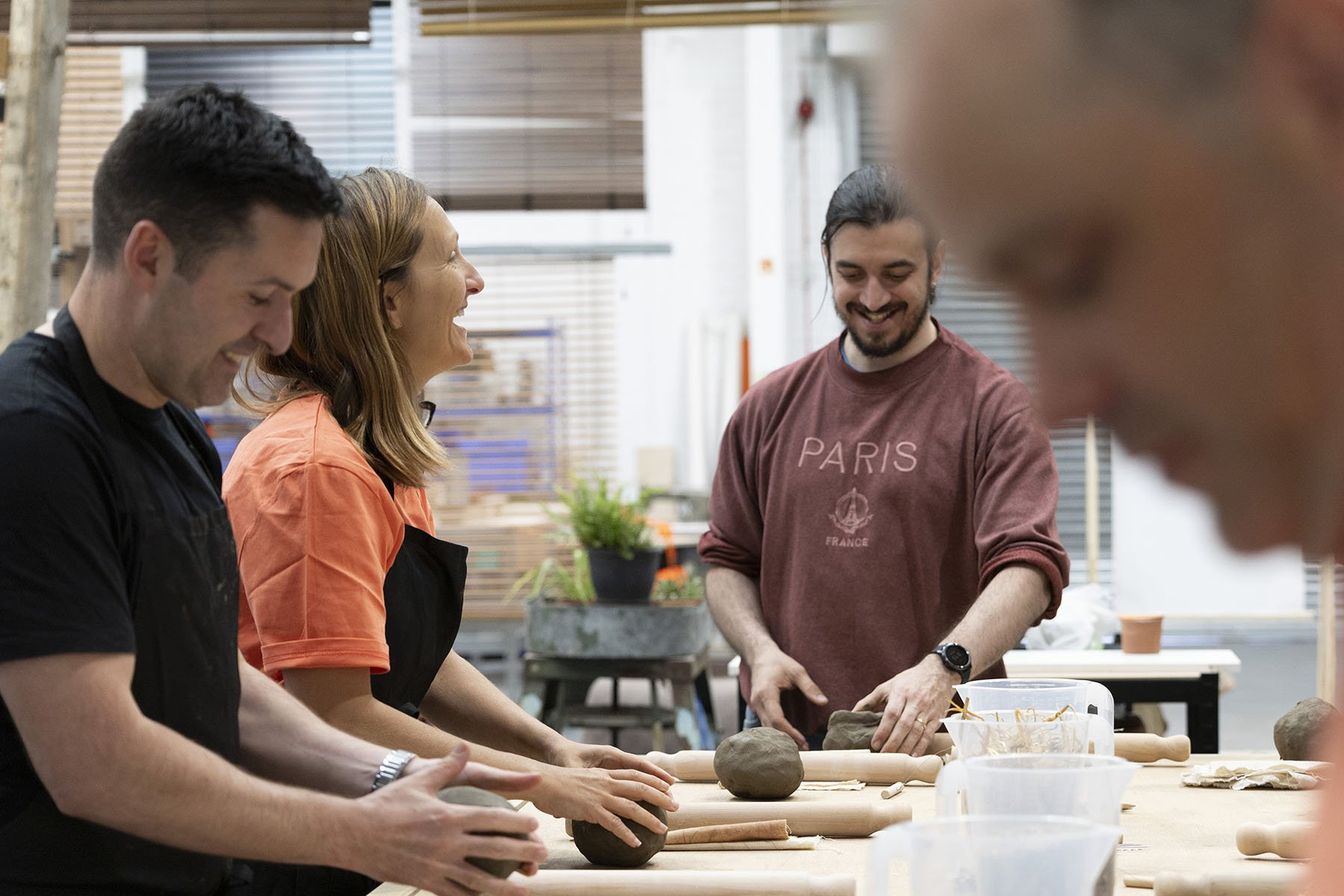
Victor at Rescued Clay
